
AREA OF A CIRCLE-In SAVAN's approach
 Here is a way to find the formula for the area of a circle:
Cut a circle into equal sectors (12 in this example) 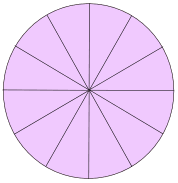
Divide just one of the sectors into two equal parts. We now have thirteen sectors – number them 1 to 13:
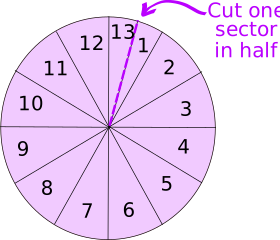
Here Area of sector1=Area of sector13=1/2*Area of sector2.
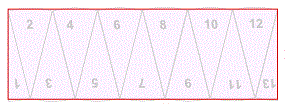
Rearrange the 13 sectors like this:
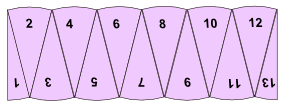
Which resembles a rectangle:
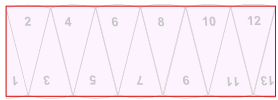
What are the (approximate) height and width of the rectangle?
The height is the circle's radius: just look at sectors 1 and 13 above. When they were in the circle they were "radius" high.
Note that Here length of the approximated rectangle is bumpy edges of 6 sectors. And initially, we divided the circumference of the circle( 2 × π × radius)equally into 12 sectors.
The width (actually one "bumpy" edge) is half of the curved parts around the circle ;which are shared equally at both sides(length sides)... in other words, it is about half the circumference of the circle.
We know that:
Circumference = 2 × π × radius:
And so the width is about:
Half the Circumference = π × radius
And so we have (approximately):
 | radius |
| π × radius |
Now we just multiply the width by the height to find the area of the rectangle:
Area = (π × radius) × (radius)
= π × radius2
Note: The rectangle and the "bumpy edged shape" made by the sectors are not an exact match.
But we could get a better result if we divided the circle into 25 sectors (23 with an angle of 15° and 2 with an angle of 7.5°).
And the more we divided the circle up, the closer we get to be exactly right.
Conclusion:
Area of Circle = π r2


Comments
Post a Comment