
Does zero mean nothing?

Zer0 is nothing but a number
Zero has brought us such a large number of unintended outcomes since it’s an introduction to the world. Individuals were murdered due to zero. A billion-dollar warship was demolished due to zero. Understudies fizzled due to zero.
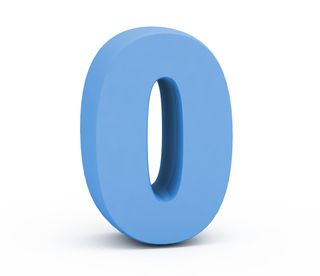
Charles Seife began his book, “Zero, The Biography of a Dangerous Idea,” with a catastrophe. On September 21, 1997, a gigantic warship which was called USS Yorktown was dead in the water as a result of a glitch. The PC arrangement of Yorktown endeavoured to separate a number by zero, and after that, it transformed into useless trash quickly. Yorktown could pulverize a military; however, a basic number which originates from nothing annihilated Yorktown.
Is it conceivable to get something from nothing? Zero is the account of a vital number; however, it wasn’t considered a number. Indeed it was significantly less than a number until moderately as of late. It also takes an unbearable and wandering course through 1500 years of humankind’s history.
Today we appreciate zero many times. On the one hand, zero is as a placeholder inside our positional number framework. On the other hand, zero enables us to make tremendous numbers without creating new digits; even it has no value. One is less than 10, and 10 is less than 100. The other utilization of zero is it stays among positive and negative numbers and acts as a number.


0can act like a number. We can subtract, add, and multiply by zero. However, we can’t separate by zero. For instance, we can’t divide 5 horses with no horses. You may think the answer is infinity; but, it’s not! Infinity isn’t a number. It’s just an idea.
Mathematics was a need to count things.
Mathematics was created to check things, such as the entry of days or the number of horses you claimed. Old civilizations created simple number frameworks; for instance, the Babylonians utilized two images in various courses of action to make number systems. The Ancient Greeks and the Mayans likewise built up their number frameworks, and these civilizations are thought to have made their very own harsh ideas of zero as a placeholder. Be that as it may, it wasn’t until the point that the Indians started building up their very own number framework that zero would be characterized expressly. Their initial number framework would likewise develop into the one we use today, at first with 9 number images. After that, a little speck used to stamp the nonattendance of a number.
In the seventh century, mathematicians made terms for zero. Besides, subtraction and division, although they battled a bit with the last mentioned, as would scholastics for many years to come. As the mathematics developed in India, it discovered its path Eastwards to Westwards, impacting the Islamic and Arabic societies where it was instrumental in trade.
In any case, zero encountered resistance in Europe. Be that as it may, by the thirteenth-century scholastics, for example, Italian mathematician Fibonacci supported the new number framework in his work, helping zero gain a healthy a dependable balance crosswise over Europe.
Over the next 400 years, as mathematics evolved from practical applications to ever more abstracted functions, zero would form the cornerstone of calculus. Calculus allowed anyone to break dynamic systems down into smaller and smaller units approaching zero but cunningly avoided having to divide by zero.
Throughout the following 400 years, as mathematics advanced from down to daily applications to always preoccupied capacities. Zero would shape the foundation of calculus. Calculus enabled anybody to separate unique frameworks into littler and littler units moving toward zero, yet cleverly maintained a strategic distance from partitioning by zero.
0had now turned into a praised device in the mathematics. And the binary numerical framework shaped the establishment for present-day PC programming. Zero indeed ventured into the spotlight to demonstrate its value. Thus it appears to be after this time, and it was at last conceivable to get something from nothing.
Zero As Found In Common Expressions:
As we have discovered zero is not just a number used to solve math problems or expand your math skills. While it did begin in many cultures as just a number in basic math and algebra. The idea of zero has also permeated common core sayings in English and other languages worldwide.
Expression using the words zero references to the state of something being missed, missing, non-existent, absent or restarting.
Common Expressions:
- A circle of friends (the unit),
- A vicious cycle, (restarting)
- Have a zero point (bottom),
- Start all over again (reset)
- Start again from the beginning, (reset)
- Zero tolerance,
- Have zero driving skills, (absence)
- zero in my Account, (number)
- A lot of fuss about nothing (absence)
- A blank slate (reset) such as telling time (00:00)
Some Mathematical Properties Of Zero

Revising mathematics is impossible without the zero, it is essential in math in either its presence or its concept. But zero in math is not always as apparent as it seems and it can be at the root of some cool math games which can make learning maths much more fun than generally assumed.
Zeros importance in maths is due to its position between the negative numbers and positives numbers( -1, 0, 1), as a number itself (0) and as a marker of the absence of other numbers (10). For such a simple symbol It is very accomplished and has had centuries to develop itself into the position that it holds today.
- It is the smallest natural whole number,
- And it is also a neutral element,
- It is the only number to be both positive and negative at the same time.
- This is the only number that remains unchanged when subtracted or when added to another number (1 + 0 = 1 or 1 – 0 = 1)
- In the multiplication tables, zero is the only number which, when multiplied by any other number, returns the result to a zero quantity.


Comments
Post a Comment