
ISRO:India's Space Journey

50 Years of ISRO: Hits and misses in India's space journey
From launching small rockets of just 30-70 kg payloads to carrying 4,000 kg payloads to the outer space, ISRO has much to celebrate when it comes to space achievement

Indian Space Research Organisation (ISRO) has come a long way since its formation on August 15, 1969. From launching small rockets of just 30-70 kg payloads to carrying 4,000 kg payloads to the outer space, ISRO has much to celebrate when it comes to space achievements. India's space journey began after Dr Vikram Sarabhai formed Indian National Committee for Space Research (INCOSPAR) in 1962, a time when 'space' as the scientific field had emerged as the next frontier for the human race. At that time, the United States and the Soviet Union were leading the space dominance. In 1969, INCOSPAR was renamed as ISRO (Indian Space Research organisation). ISRO was formed with a vision to "harness space technology for national development while pursuing space science research and planetary exploration". Here's a look back at key events, including some of the hits and misses in India's space journey.
ISRO's hits
Apr 19, 1975
ISRO built India's first satellite, Aryabhata, which was launched by the Soviet Union on April 19, 1975.

Jul 18, 1980
Rohini became the first satellite to be placed into orbit by an Indian-made launch vehicle, SLV-3.
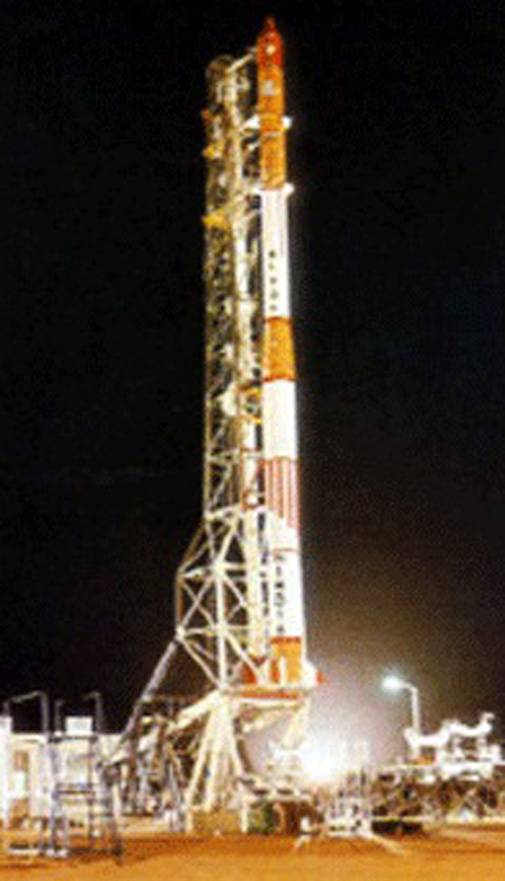
May 20, 1992
Augmented Satellite Launch Vehicle (ASLV) & Insat - 2A were launched by ISRO.
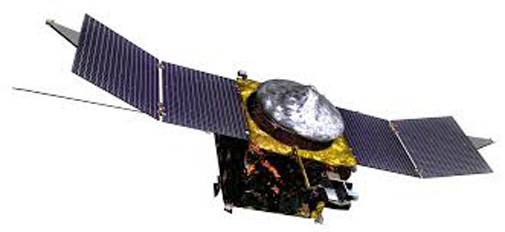
Oct 22, 2008
ISRO sent an unmanned lunar orbiter, Chandrayaan-1, into orbit. The spacecraft was orbiting around the Moon at a height of 100 km from the lunar surface for chemical, mineralogical and photo-geologic mapping of the Moon. The spacecraft carried 11 scientific instruments built in India, USA, UK, Germany, Sweden and Bulgaria. After the successful completion of all the major mission objectives, the orbit has been raised to 200 km during May 2009. The satellite made more than 3,400 orbits around the moon and the mission was concluded when the communication with the spacecraft was lost on August 29, 2009.

Sep 09, 2012
ISRO's 100th space mission was successfully launched using PSLV-C21 rocket. It also placed two foreign satellites into the earth's orbit.
Nov 5, 2013
India launched Mars Orbiter Mission on 5 November 2013 and entered Mars' orbit on 24 September 2014, making India the first nation to succeed on its maiden attempt to Mars. ISRO became the fourth space agency in the world, as well as the first space agency in Asia, to reach the Mars orbit.
Feb 15, 2017
On 15 February 2017, ISRO launched 104 satellites in a single rocket (PSLV-C37), a world record. ISRO launched its heaviest rocket, Geosynchronous Satellite Launch Vehicle-Mark III (GSLV-Mk III), on 5 June 2017 and placed a communications satellite GSAT-19 into the orbit.
Nov 14, 2018
ISRO successfully launched GSAT-29 satellite from Sriharikota, the heaviest satellite weighing at 3,423 kg aims at providing better communication for remote areas of the country.

Jul 22, 2019
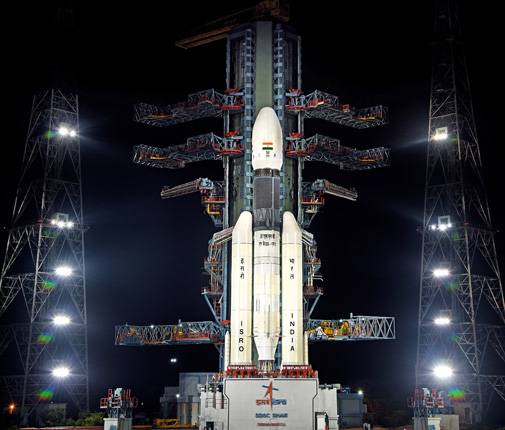
On 22 July 2019, India launched GSLV-Mk III, India's second moon mission 'Chandrayaan-2'. Chandrayaan-2 is India's first space mission that will conduct a soft landing on the moon's south polar region. The mission will make India 4th country to the soft-land rover on the surface of the moon after Russia, America and China.
ISRO's misses
Aug 10, 1979
The first experimental flight of SLV-3, India's first experimental satellite launch vehicle carrying Rohini Technology Payload on August 10, 1979, was partially successful. The satellite, which had a launch mass of 35 kg, contained instruments to monitor the flight performance of SLV-3, the first Indian launch vehicle. However, the satellite could not be placed into its intended orbit.
Apr 10, 1982
A communications satellite INSAT-1A, launched in 1982 for a seven-year mission, was abandoned in 18 months due to a series of failures such as initial problems deploying its antennas, solar array and stabilisation boom.
Mar 24, 1987
A 150 kg satellite-carrying scientific instruments SROSS-1 failed to reach Earth's orbit. The satellite was launched onboard the first developmental flight of ASLV (Augmented Satellite Launch Vehicle).

Oct 4, 1997
INSAT-2D, which was launched on June 4, 1997, became inoperable on October 4, 1997, due to a power bus anomaly and other associated problems.
Jul 10, 2006
India's Geosynchronous Satellite Launch Vehicle (GSLV-F02), with INSAT-4C on board, was launched on July 10, 2006. However, the launch vehicle GSLV-F02 could not complete the mission. The satellite INSAT-4C was the first attempt to launch a heavy communication satellite, which weighed 2.2 tonnes.
Dec 25, 2010
GSAT-5P was the fifth satellite launched in the GSAT series. It was an exclusive communication satellite to further augment the communication services currently provided by the Indian National Satellite (INSAT) system. The satellite weighed 2,310 kg at lift-off. However, GSAT-5P was not placed into orbit as GSLV-F06 could not complete the mission.

Aug 31, 2017
The Polar Satellite Launch Vehicle, in its 41st flight (PSLV-C39), was supposed to launch IRNSS-1H, the eighth satellite of the Indian Regional Navigation Satellite System (IRNSS) into a Sub-Geosynchronous Transfer Orbit. PSLV-C39 had a normal lift-off and all the flight events took place exactly as planned, except heat shield separation. This resulted in satellite separation, occurring within the heat shield resulting in the unsuccessful mission.

Top 10 achievements

1. Created a world record by launching 104 satellites in a single mission, 2017:
On February 15, 2017, ISRO created history by lifting off 104 satellites using the Polar Satellite Launch Vehicle (PSLV), an Indian rocket. The launch took place on the Sriharikota spaceport in Andhra Pradesh and successfully managed to put these satellites into their desired orbit in one go. 101 were foreign satellites out of the 104 launched. It also included the Cartostat-2 series, India's earth observation satellite.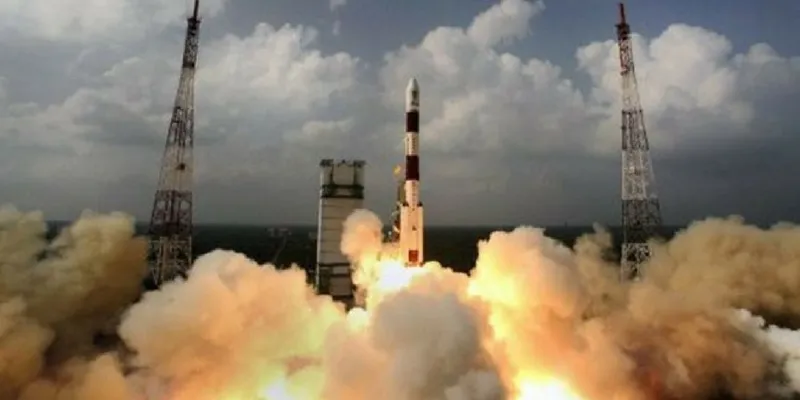
2. Mangalyaan or MOM,2014:
Thanks to ISRO, India became the first country to successfully reach Mars in its first attempt. ISRO also became one of the only four space organisations to have reached the red planet, apart from NASA, Soviet Space Programme and the European Space Programme. Mars Orbiter Mission or MOM had a budget of just Rs. 450 crore, making this Mars mission the least expensive till now. The goal of the mission was to collect more data on the atmosphere of the planet.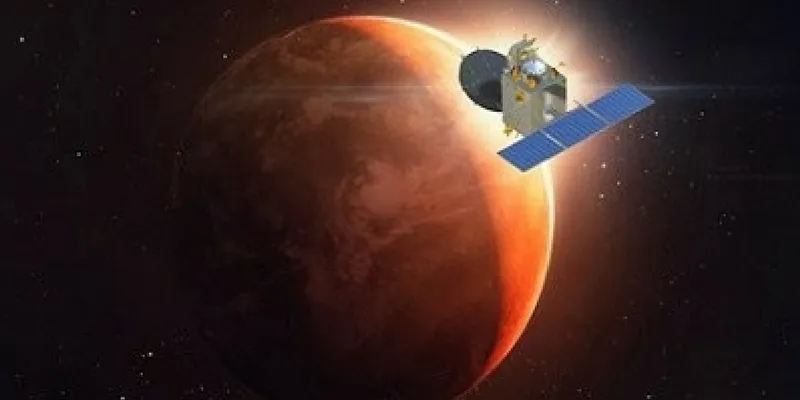
3. Chandrayaan 1, 2008:
On October 22, 2008, a 312 days unmanned lunar mission was launched. It was India's first mission to the moon and was a breakthrough in its space mission as it was one of the only six space organisations to attempt this. The aim of the mission revolved around understanding the entire topography and chemical characteristics. Though ISRO lost contact with Chandrayaan it was after the country's national flag was proudly hoisted on the moon.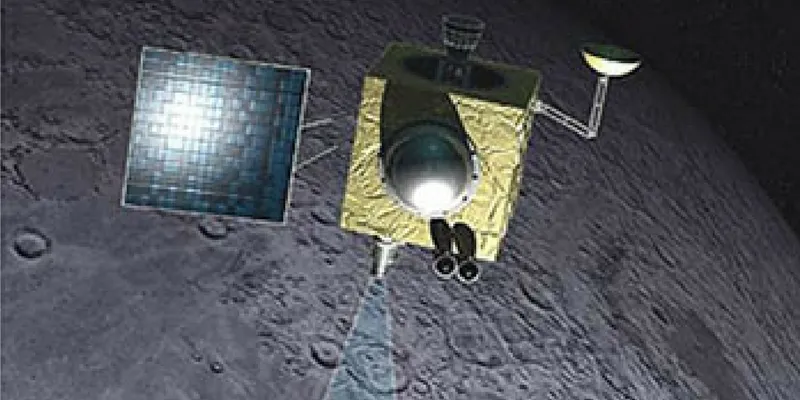
4. Heaviest Commercial Mission, 2015:
The heaviest commercial mission was taken up by ISRO where they launched 1440 kg of load. Five British satellites were launched as part of the mission using Polar Satellite Launch Vehicle-C28 on July 10, 2015. This commercial installation mission was launched from Sriharikota and included three optical earth observation satellites of 447 kg each along with two auxiliary satellites.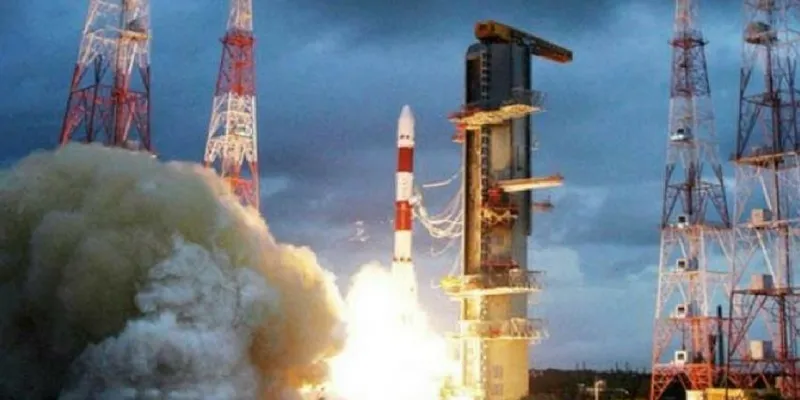
5. Indian Regional Navigation Satellite System (IRNSS):
With the operational name, NAVIC (Navigation with Indian Constellation), these group of seven satellites will help India build its own navigation system. The navigation covers an area of 15,000 km around our country. Two more satellites are present as a standby in the ground station apart from the seven satellites being used for operations. This made India one of the five countries to have its own navigation system in place.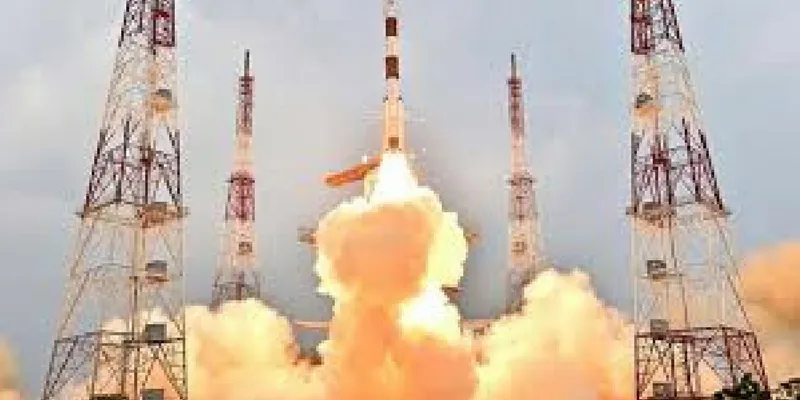
6. Space Capsule Recovery Experiment (SRE-1), 2007:
On January 10, 2007, an Indian experiment spacecraft was launched using the PSLV C7 rocket from Sriharikota. It was launched along with three other satellites to display the ability to recover an orbiting space capsule. The intention was to test other things such as Thermal Protection System, management of communication blackout, navigation, guidance and control, etc. Before re-entering the atmosphere of the earth and diving into the Bay of Bengal, the capsule stayed in the orbit for 12 days.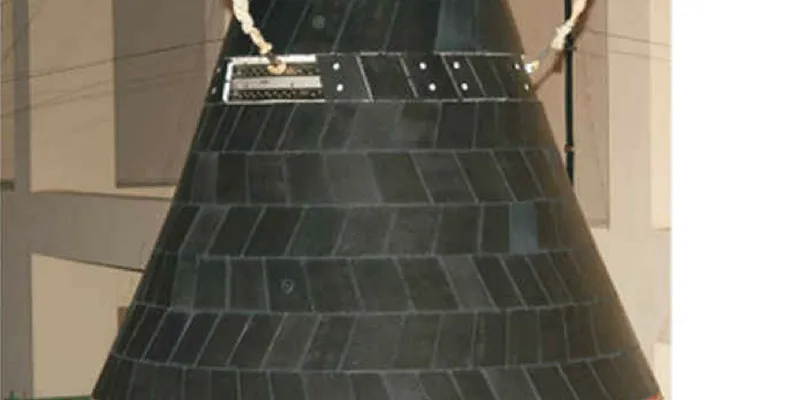
7. Indian National Satelite System(INSAT),1983:
Launched by ISRO, INSAT is a series of multipurpose geostationary satellites. It helped with telecommunications, broadcasting, meteorology, and search and rescue operations. The satellites built a communication system all across the Asia Pacific region. There are nine working satellites in the group. 
8. GLSV MK3, 2014: ISRO launched GSLV-MK3 in December 2014:
That has an Indian made crew capsule which can carry up to three astronauts to space. India will become a part of the exclusive group of space cruising nations which can take humans to space. It is one of the heaviest rockets and is capable of carrying 4 tonnes of load. Now, ISRO is planning to launch GSLV MK4, the next level of this operation, which would be able to carry 6 tonnes. 
9. Reusable Launch Vehicle (RLV):
These space shuttles were built at a very low cost of Rs. 95 crores. The intention was to reduce the satellite costs and these are reusable space shuttles.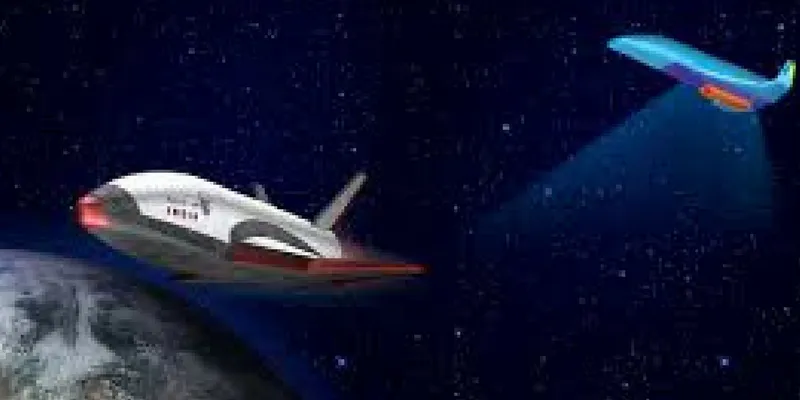
10. Aryabhatta, 1975:
Aryabhatta is India's first satellite and has been named after the famous astronomer. It was the spacecraft to be entirely built in the country making a breakthrough in space missions.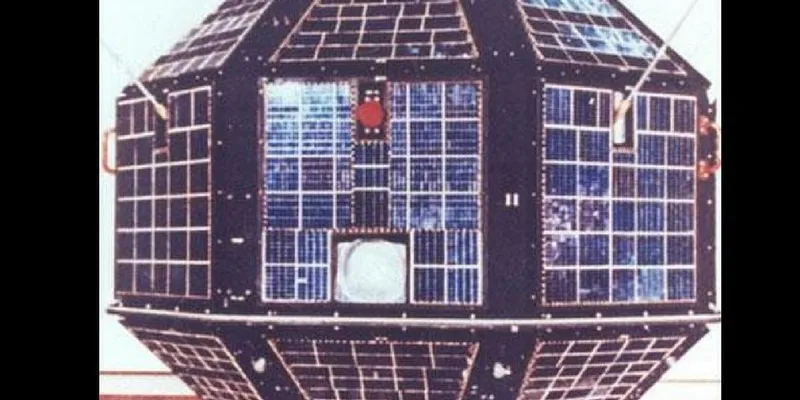
Did You Know?😕
• Indian Space Research Organisation (ISRO) was founded in 1969 to develop an independent Indian space program. Its headquarters are in Bangalore (Bengaluru).
• From a modest beginning in the 1960s, India’s space programme has grown steadily, achieving significant milestones. These include fabrication of satellites, space launch vehicles, and a range of associated capabilities.
• Now, ISRO’s annual budget has crossed 10,000 crores ($1.45 billion), growing steadily from 6,000 crores 5 years ago.
Thrust Areas of ISRO
Satellite Communication
- INSAT and GSAT – to address the national needs for telecommunication, broadcasting and broadband infrastructure.
- It provides services linked to areas like telecommunication, telemedicine, television, broadband, radio, disaster management and search and rescue services.
- Indian Remote Sensing (IRS) series (the 1980s), RISAT, Cartosat and Resources at series provide wide-field and multi-spectral high-resolution data for land, ocean and atmospheric observations.
- It helps in forecasting, disaster management and national resource mapping and planning.
- With higher resolution and precise positioning, Geographical Information Systems’ applications today cover all aspects of rural and urban development and planning.
- GPS-aided GEO augmented navigation (GAGAN) a joint project between ISRO and Airports Authority of India, augmented the GPS coverage of the region, improving the accuracy and integrity, primarily for civil aviation applications and better air traffic management over Indian airspace.
- Indian Regional Navigation Satellite System (IRNSS), a system based on seven satellites in geostationary and geosynchronous orbits.
- It provides accurate positioning service, covering a region extending to 1,500 km beyond Indian borders, with an accuracy greater than 20 metres.
- In 2016, the system was renamed NavIC (Navigation with Indian Constellation).
- Chandrayaan
- Mangalyaan missions
- Manned space mission, Gaganyaan, planned for its first test flight in 2021.
- Satellite Launch Vehicle (SLV) and Augmented Satellite Launch Vehicle (ASLV)
- SRO has developed and refined the Polar Satellite Launch Vehicle (PSLV) as its workhorse for placing satellites in low earth and sun-synchronous orbits.
- Geosynchronous Satellite Launch Vehicle (GSLV) programme is with its MkIII variant.
Way Forward
- With the Ministry of Defence now setting up a Defence Space Agency and a Defence Space Research Organisation, ISRO should actively embrace an exclusively civilian identity.
- A new Space law for India should aim at facilitating growing India’s share of global space economy to 10% within a decade which requires a new kind of partnership between ISRO, the established private sector and the New Space entrepreneurs.
- Private sector investment is critical, for which a suitable policy environment needs to be created
- There is a growing realisation that national legislation is needed to ensure the overall growth of the space sector.
- The draft Space Activities Bill introduced in 2017 has lapsed and the government now has an opportunity to give priority to a new Bill that can be welcomed by the private sector, both the larger players and the start-ups alike.
References:
https://www.businesstoday.in/top-story/isro-50-years-hits-misses-india-space-journey/story/373050.html
https://blog.nextias.com/achievements-of-isro
Read more at:
https://indianexpress.com/article/research/isro-rlv-td-history-of-indias-space-research-space-activities-space-journeys-isro-launches-reusable-launch-vehicle-spacecraft-2815247/
https://www.isro.gov.in/about-isro/isros-timeline-1960s-to-today
https://www.space.com/indian-space-research-organization.html


Comments
Post a Comment